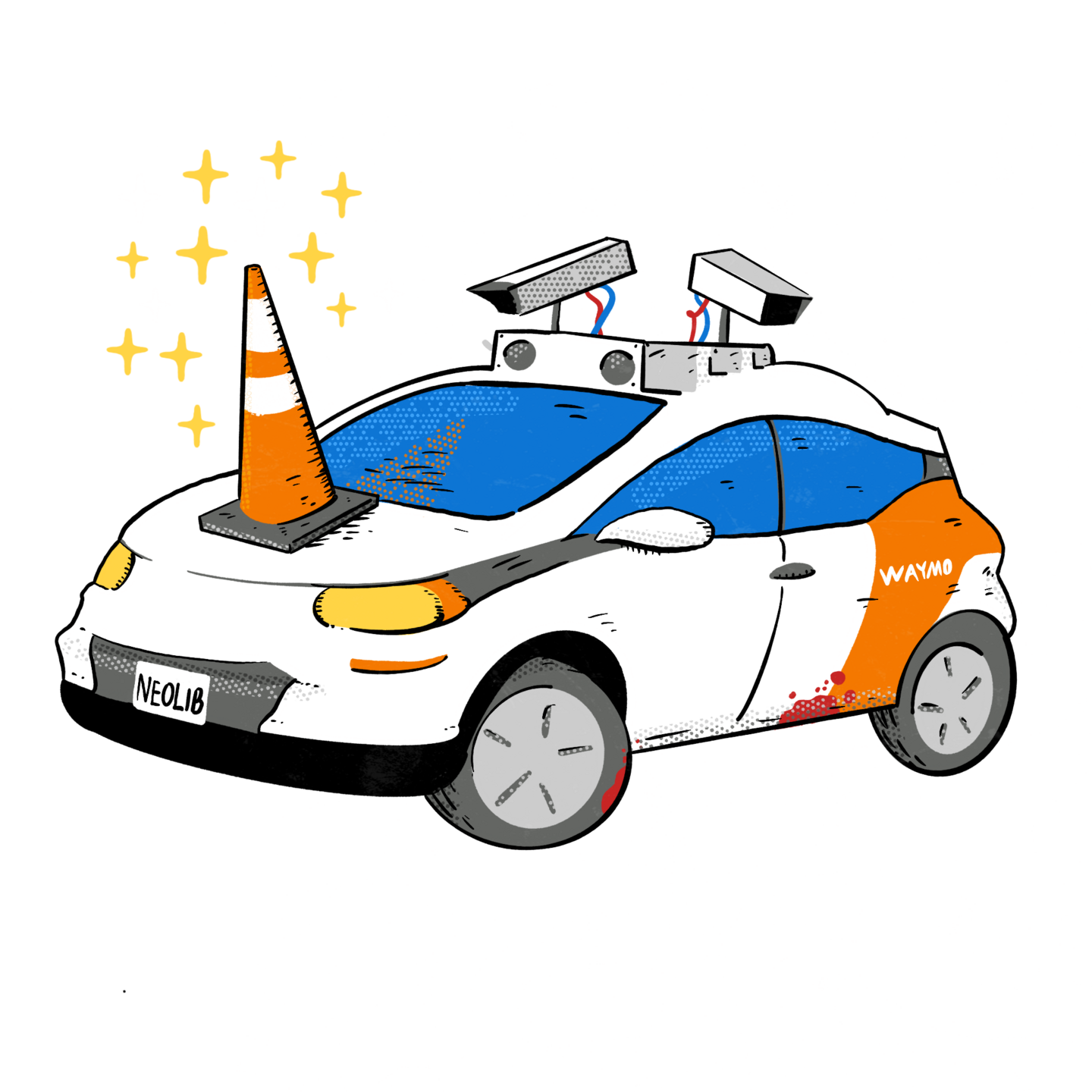
East Bay Times – California bill would require robotaxi companies to hire humans for emergencies
Waymo representatives sat in Sacramento as California’s state Senate transportation committee passed a bill 7-2
See original article by Noelle Harff at the East Bay Times
California’s state Senate transportation committee on Tuesday passed a bill 7-2 that would require autonomous vehicle companies to employ their own technicians — one for every three self-driving cars — capable of responding to emergencies within 10 minutes.
The legislation was introduced by state Sen. Dave Cortese, D-San Jose, after San Francisco experienced a large-scale multi-day power outage that left Waymos and other autonomous vehicles frozen in place across the city, blocking intersections and streets on Dec. 20.
“It was the start of an absolutely catastrophic, multi-day blackout, a complete disaster,” said Sen. Scott Wiener, D-San Francisco.
The four-part bill would require autonomous vehicles to:
- Require anyone overseeing or responding to a commercial autonomous vehicle on California roads to be U.S.-based and hold a valid California driver’s license
- Employ autonomous vehicle technicians at a minimum 3-to-1 ratio, on call with no more than a 10-minute response time
- Give emergency service workers the ability to operate autonomous vehicles in emergency situations
- Collect and submit data to the DMV on technicians employed, incidents, emergency moves and related activity.
Present to support the bill was a broad coalition, including California Professional Firefighters, Service Employees International Union California, California Federation of Labor, California Police Chiefs Association, California Gig Workers Union, and more than a dozen rideshare drivers. Representatives from Waymo also attended the meeting but they did not address the committee.
During the blackout, first responders and city workers could not move the vehicles without help from the companies — which meant waiting on hold for an offshore call center to remotely move the vehicle or grant instructions for the first responder to do so.
One first responder waited on hold for an operator for 53 minutes, according to Meagan Subers, speaking on behalf of California Professional Firefighters.
“Every firefighter that has had to interact with these vehicles, in one way or another, has said to me their No. 1 request has always been the ability to override the system and move the vehicle themselves,” Subers said. “They have also said to me: I don’t want to be AAA.”
Arguing against Senate Bill 1246 were Sarah Boot, testifying on behalf of the Autonomous Vehicle Industry Association, and Chris Childs, retired assistant commissioner of the California Highway Patrol.
Opponents of the bill say lawmakers should wait for existing legislation and regulation — “which will be the most comprehensive in the country” — to go into effect this summer, said Boot.
But Cortese maintains that existing legislation doesn’t include the need for onsite technicians and the requirement for operators to be trained specifically on California road laws.
The recently passed Assembly Bill 1777 allows law enforcement to ticket self-driving cars for traffic violations and requires all vehicles to have a communication device — not a QR code — that connects first responders directly to autonomous vehicle technicians.
The new DMV regulation mandates that operators submit more detailed incident reports, including “stoppage events” (where vehicles get stuck), collisions and specific braking incidents.
“Creating arbitrary regulations before new and significant requirements go into effect in a few short months will create confusion and will not make our roads safer,” she said. But it will instead stifle innovation, acting as a sort of self-driving cars “de facto ban.”
Waymo vehicles are currently mapping San Diego streets in preparation to begin picking up passengers in mid-2026. The company has not given an exact date for its launch in San Diego.
Given that this was the first committee hearing, amendments are likely. It must next pass the Appropriations Committee before heading to a full Senate floor vote.
“The legislative direction so far has only touched on a couple of issues, frankly, and we just think there’s a lot more that needs to be done,” Cortese said. “Things are moving very, very quickly, so kicking the can down the road and waiting for rulemaking to happen might be awfully late.”
See original article by Noelle Harff at the East Bay Times