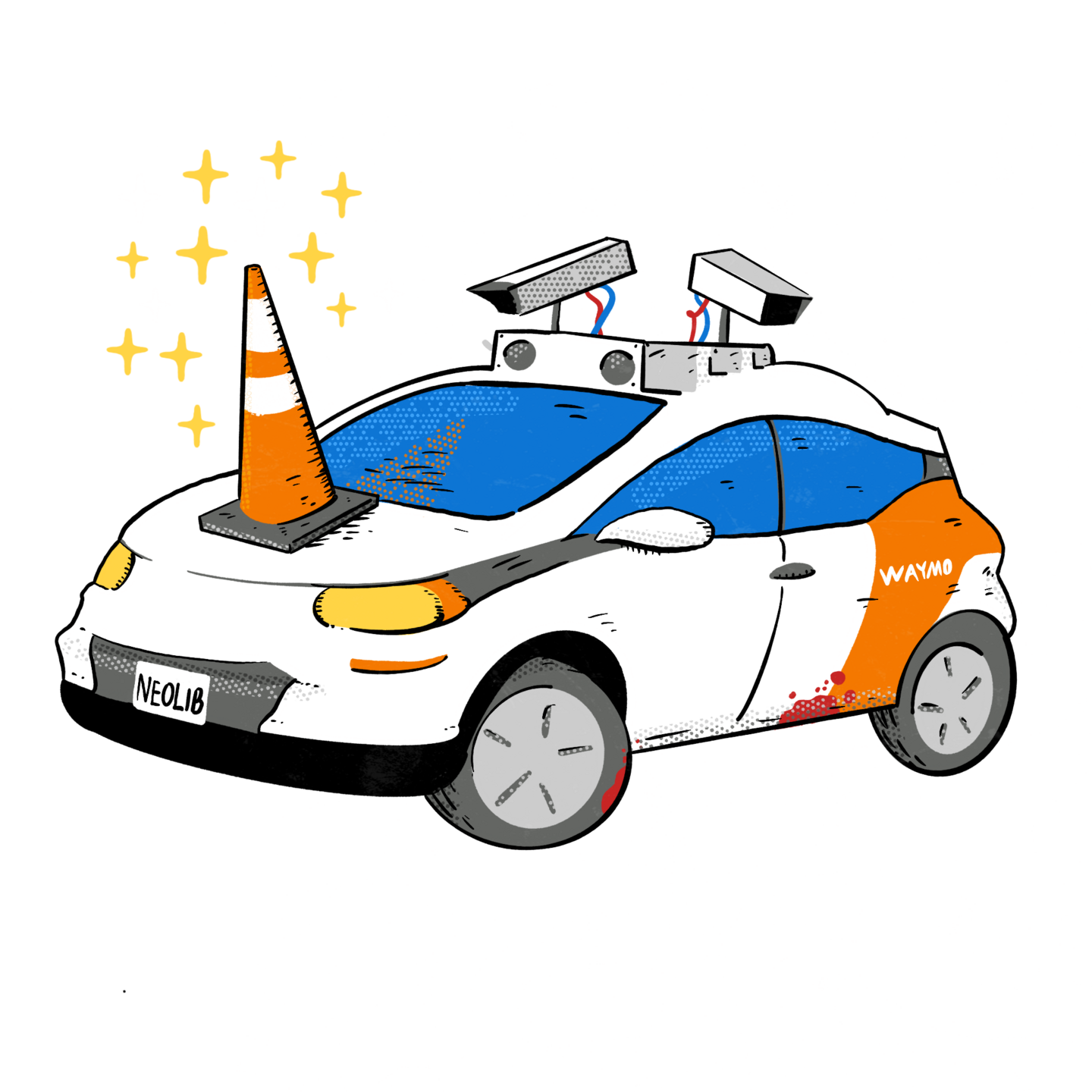
NY Times – Blind Waymo Users Revel in the Joy of Riding Alone
Waymo has been an object of frustration to some in California. For visually impaired people, it can also bring a rare feeling of independence.
Editors note: The author of the article did not realize that there has been a concerted effort by Waymo of “crip-washing” the issue of transportation for those with disabilities. That is wholly inappropriate. Therefore sent the following email to the author:
Subject: The unfortunate crip-washing by Waymo
I truly appreciate your coverage of people with disabilities but your article on Blind Waymo Users Revel in the Joy of Riding Alone unfortunately falls into the crip-washing marketing ploy carefully created and funded by Waymo.
You are likely wondering what “crip-washing” actually means. It is similar to “green-washing”, but where the benefits to people with disabilities is cynically exaggerated to benefit others who don’t have disabilities. I attribute the “crip” part to the late, great disability advocate Alice Wong. Examples of crip-washing include using a fake service animal harness to justify bringing in cute Mr Fluffykins into a restaurant, or using grandma’s disability placard to park illegally.
Being a person who is disabled (long COVID ME/CFS for years now, cannot work nor drive) I take great offense at such selfish actions. And they directly impact those with disabilities as Uber drivers refuse genuine service animals because they have had to deal with so many fake ones, and disabled parking places are often not available because they are taken by people who don’t actually need to use them.
Waymo started its crip-washing campaign back in 2023 when they were pursuing a permit from the CPUC. They contributed significant sums of money to the Lighthouse for the Blind in order for them to actively support the company. They also closely worked with the Lighthouse to have speakers show up at the hearing, of course with their adorable guide dogs. Waymo also provided free robotaxi rides to people who are visually impaired, and of course professionally videoed the events to use as marketing material. Interestingly, several visually impaired people who were not associated with the Lighthouse actually spoke out against Waymo. Shows you that Waymo’s marketing efforts worked. Needless to say, the CPUC granted Waymo their permit.
Since that hearing Lighthouse ran into serious financial mismanagement issues and removed their CEO who worked with Waymo on this issue.
If you really want to see what truly helps people with disabilities get around, ride the bus! You will find the front of the bus full of people with disabilities, including those who are visually impaired. Public transportation doesn’t need to resort to crip-washing in order to justify its existence.
See original article by Sonia A. Rao at NY Times
Ruben Brunt hopped off a ferry, tapped his white cane against the sidewalk and held his phone to his ear to listen for directions. His destination was a white Jaguar idling a few blocks away — with no one behind the wheel.
Mr. Brunt, 28, was born with a rare eye disorder. He can’t drive himself, and had never experienced the feeling of being alone in a car — until Waymo’s self-driving vehicles started navigating San Francisco’s hilly streets two years ago.
Now Mr. Brunt will occasionally make the hourlong journey across the bay from his home in Solano County, Calif., just to ride in one. “It’s that feeling of independence and actually having the control,” he said. “Being able to play whatever music you want, feeling like you’re in your own car.”
With hubs in San Francisco and Los Angeles, Waymo and its autonomous vehicle fleet have sometimes been a target of frustration and conflict, trapping riders when attacked, stalling during power outages and even killing a beloved neighborhood cat.
But with the largest population of blind people in the country, California has also seen the robot taxis offer something unexpected and joyous to the visually impaired — an opportunity for solitude on the streets.
“I don’t have to talk to another human being,” said Sarah Funes, a South San Francisco resident who is partially blind and partially paralyzed from a brain tumor. “I get in a car, and I’m just alone.”

Another benefit is that driverless cars don’t discriminate, Ms. Funes said. She often posts online about human ride-share drivers who refuse to transport her service dog, despite policies requiring them to accommodate service animals.
Claire Stanley, who is legally blind and uses a guide dog, said she had also had to “battle” for Uber and Lyft drivers to pick her up at home in Washington, D.C. When she travels to a city with autonomous ride shares, she and her dog, a yellow Labrador named Tulane, jump into them without a struggle.
“When you don’t have a driver, there’s no driver to say no,” she said.
Safety concerns have circulated after cases in which Waymo vehicles drove through a police standoff in Los Angeles, and blocked ambulances responding to a shooting at a college bar in Austin, Texas. But many women, especially those with visual impairments, consider them safer than cars driven by men.
Uber in particular has faced mounting scrutiny from lawmakers for what has been described as a pervasive pattern of sexual violence during rides. “I’m very cognizant about not being able to see the person and know what they’re doing,” Ms. Stanley said.

Waymo has worked to bolster its popularity among riders with disabilities by partnering with several organizations to solicit feedback, including the American Council for the Blind, where Ms. Stanley works.
The company has also financially contributed to some of those organizations, and has shared the experiences of blind riders in public relations campaigns designed to counter negative perceptions of its cars.
Ms. Funes said she would love to take Waymos more often, but their higher costs could be prohibitive. “I would exclusively use them if they didn’t cost almost three times as much,” she said.
Waymo currently operates a fleet of about 1,000 cars across the Bay Area, compared to tens of thousands of Uber and Lyft drivers. The lower supply for self-driving cars contributes to higher prices, with Waymos costing on average around 30 percent more than other ride shares.
Waymo is quickly growing, with plans to expand to over a dozen cities in the next few years. Other self-driving car companies, including Zoox and Cruise, have entered the market as well.
Mr. Brunt dreams of owning a driverless car one day so that he can always travel on his own terms, he said. For now, though, he settles for getting to the city as often as possible to ride Waymos.

On a drizzly day last month, Mr. Brunt was heading to the de Young Museum in Golden Gate Park. He had some trouble finding his Waymo’s precise location, so he pressed a button on the app to play a melody from the car and followed the noise.
He hopped into the passenger seat, and his Spotify account immediately connected to the car’s stereo system, blasting his electronic music.
As the steering wheel began to turn, moving the car onto the road, Mr. Brunt, ready to enjoy the ride, leaned his seat back and fiddled with the temperature until it was set to 70 degrees.
“That feeling of independence is amazing,” he said. “It’s something I never thought I would have growing up.”
See original article by Sonia A. Rao at NY Times