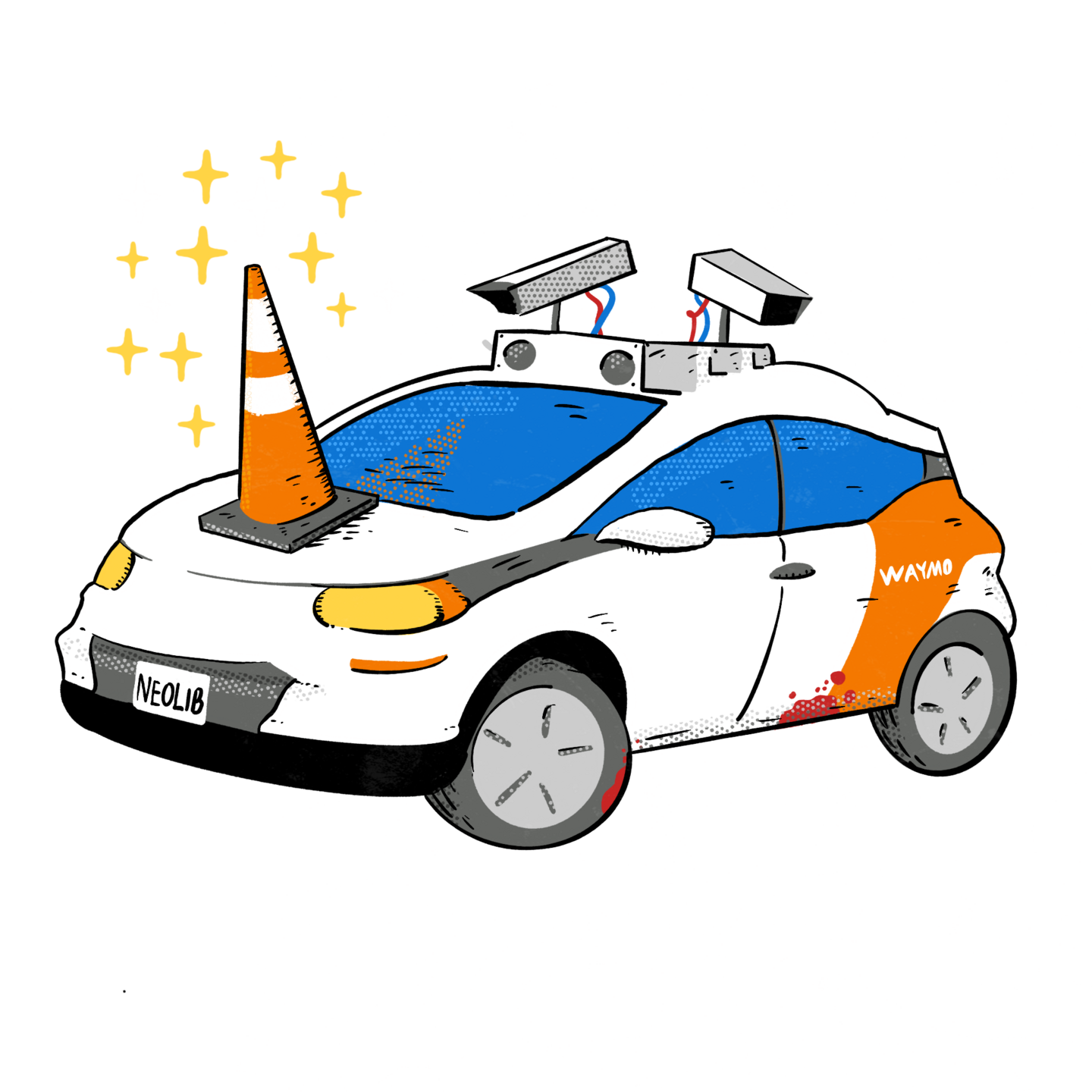
SF Chronicle – S.F. July 4 traffic meltdown: Lurie urges state leaders to clamp down on Waymo
Editors note: San Francisco Mayor Lurie has finally realized that Waymo robotaxis are only half baked and absolutely cannot handle large events and other complicated situations. A bit late considering that Lurie bent the rules to allow Waymos on “car-free” Market Street, which Waymo still isn’t using due to operational complexities, more than a year later. Yet this decree also allowed Ubers, Lyfts, and tour buses onto Market Street, which absolutely no one wanted. And it should be noted that claiming that only the state can regulate robotaxis is a pathetic copout. SF has many requirements about which type of vehicle can go where. Trucks are banned from many streets. Non-transit vehicles are banned from using red transit lanes. The city should simply created regulations that require robotaxis to not go within an area that has a pre-scheduled large event.
See original article by Rachel Swan at SF Chronicle
San Francisco Mayor Daniel Lurie has called on state regulators to set new standards for robotaxis during major events, following a July 4 traffic disaster that appeared to stem from stalled Waymo vehicles.
As crowds swarmed to the Presidio and surrounding waterfront neighborhoods for a historic fireworks show over the Golden Gate Bridge, “Waymo vehicles struggled to navigate growing volumes of vehicular traffic and pedestrians,” Lurie wrote Thursday in a letter to state Secretary of Transportation Toks Omishakin, which was obtained by the Chronicle.
“By the end of the fireworks show,” the mayor continued, “autonomous vehicles became immobilized in travel lanes, blocking key streets and ultimately bringing traffic to a standstill.” He noted that Muni shuttles got marooned in the gridlock, and Waymo vehicles that lost their charge while idling ultimately had to be towed, creating a line of obstacles that prevented even the tow trucks from reaching them.
Spokespeople for Waymo were not immediately available to comment. Previously they have said they are continuing “to review the events of July 4 and are in contact with city officials and local authorities.”
Lurie contended that Waymo and other autonomous vehicles should “demonstrate four core operational capabilities” to provide service during major events or emergencies. He listed the requirements as follows: that robotaxi companies show they can “keep people moving” by immediately clearing paralyzed vehicles from travel lanes; that they “respond in real-time” by updating geofencing or changing pick-up and drop-off locations so that traffic can keep flowing; that they “provide operational transparency” by updating local agencies on service disruptions, immobilized vehicles and roadside assistance efforts; and that they conduct tests and “exercises” that indicate they are ready for widespread crowds and unpredictable road conditions — a strategy that Lurie dubbed “prove it before you deploy it.”
His letter has cast a harsh spotlight on Waymo as city leaders conduct an autopsy on the July 4 transportation meltdown, which snarled roads in a vast northern swath of the city for hours, starting at around 8 p.m. Revelers sat helpless in cars or trapped Muni buses, with some deciding it would be faster to get out and walk.
Earlier this week, communications between policymakers and representatives of the ride-hail company Uber indicated that travel times near the Presidio were twice as long as the citywide average between 9 and 10 p.m. that night, and that the company’s trip completion rate fell to 27% in areas near the fireworks spectacle, compared with an 80% average for the city. Uber blamed “a few road obstructions” on narrow streets with “limited ingress and egress” for causing a cascade of impacts. Videos posted to social media showed perhaps dozens of stalled Waymos on Edie Road, a connection point to the roundabout on Girard Road that feeds into Marina Boulevard.
The July 4 chaos followed a previous Waymo collapse when PG&E power outages left much of San Francisco cloaked in darkness last December. Robotaxis stalled nearly 1,600 times because they were confused at intersections where stoplights went dark. Lurie highlighted this incident in his letter to Omishakin to convey the scope of a problem that persisted on July 4.
Although the city and Waymo had taken steps to prevent traffic jams on July 4, with Waymo assigning an employee to work in the city’s emergency operations center that night, and city officials requesting that Waymo and other operators limit service near the waterfront, this “voluntary coordination and pre-event planning alone” was not enough to stave off upheaval, Lurie wrote.
City officials have no ability to regulate Waymo and other AV companies, which are overseen by the California Public Utilities Commission and the Department of Motor Vehicles. Nonetheless, City Hall officials are mounting pressure on the state to act.
“California’s challenge now is not just whether autonomous vehicles can operate safely under normal conditions,” Lurie wrote, “but also whether they can perform reliably during extraordinary ones.”
See original article by Rachel Swan at SF Chronicle