SF Standard – Waymo meltdowns, Lurie pressure, spur push for tougher robotaxi rules
New legislation from Sacramento would require AV companies to move stalled cars — or face fines. Waymo and the robotaxi industry aren’t happy about it.
See original article by Garrett Leahy at SF Standard
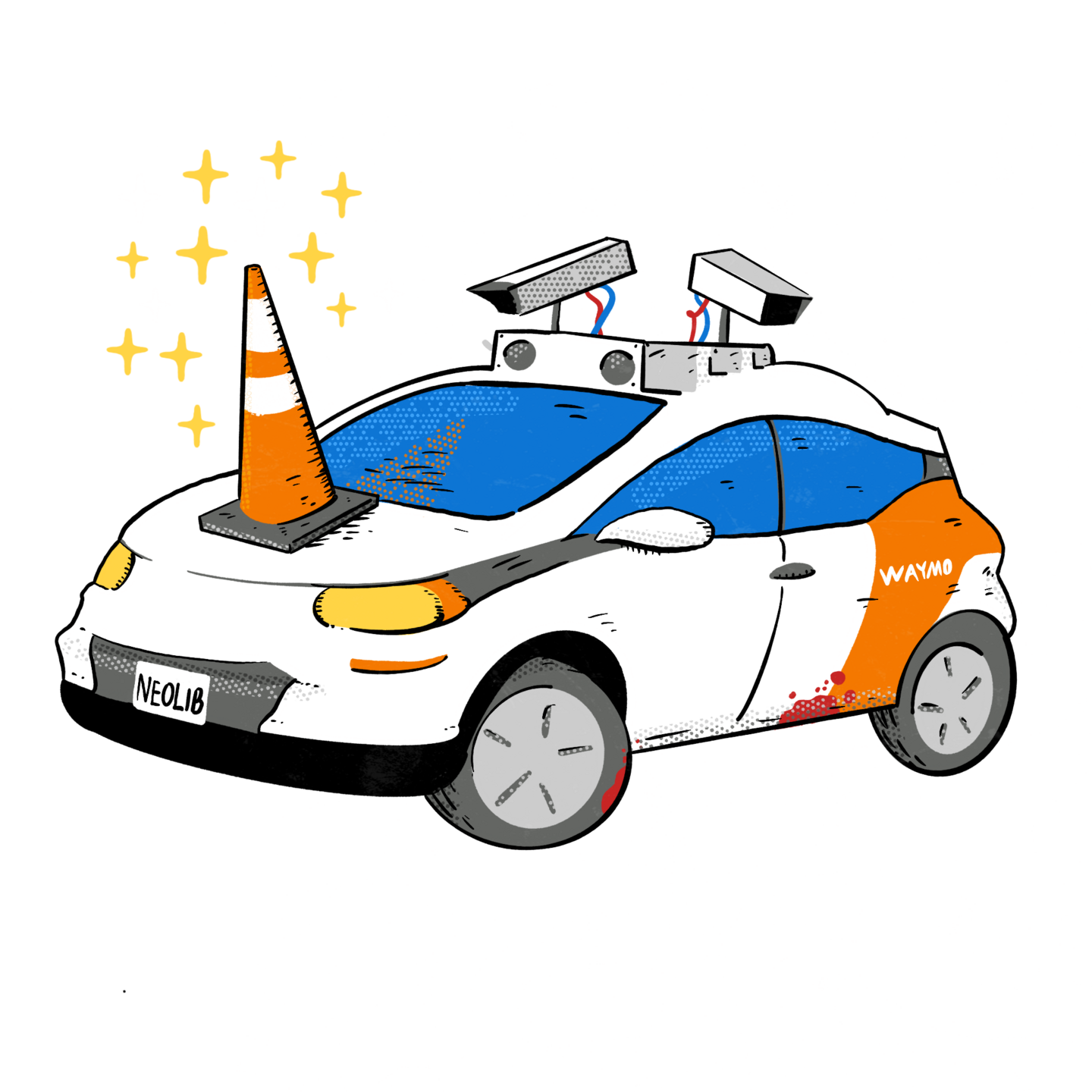
After the fogged-in Fourth of July fireworks show was further enshittified(opens in new tab) by an army of stalled Waymos, leading to hours of gridlock traffic, Mayor Daniel Lurie wrote to state officials last week urging the creation of stricter robotaxi regulations. Robotaxis must prove they can handle big events without bricking in the middle of the road, the mayor wrote.
Lurie is not the only official with thoughts on robotaxi meltdowns. State Sen. Dave Cortese of the South Bay introduced a bill in February that would set legal standards for AV companies to promptly move their robotaxis off the road if they stall or break down.
Waymo maintains that its vehicles are safe, but elected officials are trying to deal with the increasingly frequent inconveniences they create. Cortese’s bill aims to fill in the gaps when Waymo’s self-driving tech freezes in unfamiliar situations, like the Dec. 20 blackout that left about 1,500 of them stalled around the city. Waymo told the California Public Utilities Commission its cars stopped 1,593 times for two minutes or more during the outage, and the company sent staff or tow trucks to retrieve 64 vehicles. Since April 2025, Waymos have blocked first responders in the city 31 times.
Under Cortese’s bill, AV companies would be required to immediately dispatch a technician to move a car if it has a steering wheel or allow first responders to move it. If a robotaxi doesn’t have controls, the company has to remotely move the car or put it in neutral so it can be towed as soon as emergency responders ask. If there is a fleetwide system failure, AV companies would have to tell cities and first responders where their cars are and deploy technicians if their vehicles can’t be moved and are creating traffic or safety issues.

Each failure to move cars or ensure that first responders can move them would result in a $5,000 fine, and if an AV causes a roadblock for more than 30 minutes and blocks first responders, the fine would be $10,000. Failure to comply with the law would result in a civil action against the AV company.
This bill is the latest by Cortese, chair of the Senate Transportation Committee, to tighten regulation of AVs. A previous bill he wrote, SB 915, sought to empower cities to pass local regulations of AVs more broadly, but it died in committee in 2024.
The lobbying group the Autonomous Vehicle Industry Association opposed SB915, arguing(opens in new tab) that it would stifle innovation and limit customers’ access to robotaxis. The AVIA, along with 30 other industry groups and companies, including Waymo, has also come forward in opposition to Cortese’s latest bill, arguing in a June 26 letter(opens in new tab) that the notification requirements as written would be onerous and require companies to deploy technicians for minor incidents that don’t create a safety hazard.
Cortese’s new bill, SB 1246, which is narrower in scope than its predecessor, is in the Assembly Appropriations Committee. The Legislature will have until Aug. 31 to pass it and send it to Gov. Gavin Newsom for a signature.
We spoke with Cortese about why he’s pushing this bill now, Lurie’s letter, and how AV companies have responded.
This conversation has been edited for brevity and clarity.
What prompted SB 1246?
Well, I’ve been working on this issue for some time now. Two years ago, I introduced a bill called SB 915, which would have created local control over a handful of general issues like traffic congestion.
One of the issues that’s in SB 915 is the ability to move vehicles if you have to move them. There’s no municipal or county ability legally to regulate robotaxis at all, or any commercial autonomous vehicles. That bill died. It got over the Senate with flying colors, but it died when it got over to the Assembly Transportation Committee. There were hostile amendments put on the bill by that committee, which stripped it down to pretty much nothing.
What do you think of Lurie’s letter?
I welcome the mayor’s letter. Having a popular mayor like Lurie essentially lays out the laundry list of concerns that everybody in the state of California is facing with these autonomous vehicles right now and some of the potential remedies. He isn’t just saying, “Hey, this is a problem — do something about it.” But his letter to me is this coming to a head. It was predictable, very predictable. He’s suggesting what it might look like to start to remedy those problems. SB 1246 does the same.

Do you plan to amend your bill to include regulations mentioned in Lurie’s letter, such as making AV companies do tests to ensure they can operate at major events without issues or alter geofencing as needed?
It’s not something new that needs to be put into the bill. The most important thing about SB 1246 at this point is trying to accelerate the response to emergency situations.
Geofencing is already covered in [Assemblymember Phil] Ting’s bill. There’s no reason to do that; it would just be redundant. [Testing] is already covered by the DMV prior to licensing and regulation. And according to the DMV and the [California Public Utilities Commission], they have the power to revoke if they feel that the vehicles are not tested properly for the road, and they have done that to some degree.
What have some of the AV companies said about your bill?
Waymo, especially in the AV association, their lobbyist, was coming into committee after committee saying, “Look, we don’t want you to touch our vehicles. We don’t want them towed, and we don’t want to have an override. We don’t want either.”
So then we said, “OK, well, you’ve got to do a [manual] override,” but then Zoox came back with, “Yeah, but it’s not so easy to just manually override, for somebody to jump in the car or have the remote operator allow it to be steered manually by somebody, because there’s no steering wheel.”
Those provisions that are there to deal with a lack of apparatus were basically amended as a way to get [AVs] out of the way when law enforcement is going to be helpless to move them on their own without a tow truck.
They haven’t removed their opposition. That’s really where we’re at with the AV association and Waymo.
Your previous bill aimed to allow localities to regulate AVs on a per-city basis. While SB 1246 doesn’t do that, do you plan to introduce other bills that would allow local regulation of AV operations?
In January, I think, you will see more bills, and you may see a new local control bill come around.
It wouldn’t take all that much to get other members of the Legislature to accelerate their efforts to bring about change in the way these vehicles are regulated. We are experiencing an AI revolution that robotaxis are a small part of, and the Legislature is really grappling with trying to keep up with the speed of AI and the speed of change.
We introduced this bill in February. As a small handful of practical regulations, we don’t even know if it’s going to be passed. Next January, if new bills are introduced, it’ll take a year, and in some cases two, before we know if they will become law. Artificial intelligence, including autonomous vehicles, isn’t waiting around for a Legislature to act for over 12 or 24 months. Even with 120 legislators, we’re having a hard time keeping up.
See original article by Garrett Leahy at SF Standard