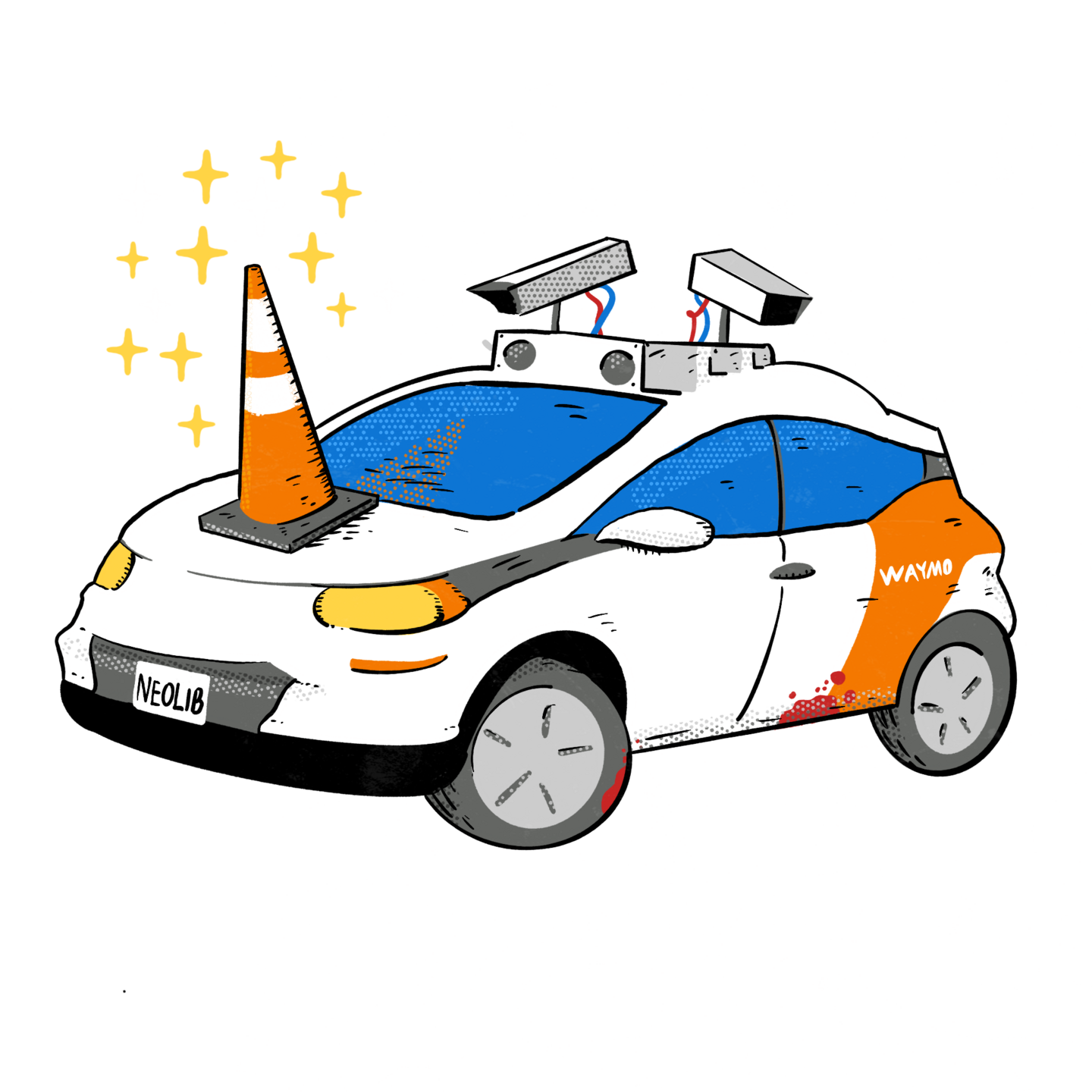
SF Chronicle – Inside Daniel Lurie’s handling of Waymo crisis during S.F. power outages
See original article by Rachel Swan, J.D. Morris at SF Chronicle
A power outage five days before Christmas had bathed San Francisco in darkness. Across the city, Waymo robotaxis were trapped in intersections, hazards blinking. Meanwhile, Mayor Daniel Lurie was standing inside the Department of Emergency Management, firing off text messages to the CEO of the autonomous vehicle company.
“You have a car blocking a fire (t)ruck from getting to an active fire at the 900 block of Grant (Avenue),” the mayor wrote at 5:46 p.m. on Dec. 20 relaying a desperate alert from emergency responders.
Over the next three hours, the texts continued. Lurie cited locations from Chinatown to the Inner Sunset where immobilized robotaxis were blocking traffic. He delivered the information without apparent emotion or commentary, but the sheer volume of messages — five in three hours — conveyed the urgency.
San Francisco’s December outage, caused by a fire at PG&E substation, would pose a critical test of leadership for Lurie. Throughout the day he tried to instill calm and deliver information via social media, while scrambling behind the scenes to manage the city’s response to the blackouts. It was also a crucial moment for Waymo, a titan of the autonomous vehicle market struggling to build public trust.
Lurie’s texts with Waymo CEO Tekedra Mawakana, copies of which were obtained by the Chronicle this week, show how he sought to end the robotaxi traffic chaos during the PG&E power outages that left about one third of the city without electricity on a busy holiday weekend. Amid the text exchange, Lurie and Mawakana also spoke in a phone call, details of which were not captured in the messages.
“Please update me on the status of your fleet,” Lurie wrote in his initial flurry of texts to Mawakana. “Especially around impacted areas of town.”
By dusk, images of paralyzed Waymo robotaxis were ricocheting across social media, turning one of the city’s proudest innovations into slapstick comedy. Videos on TikTok showed the company’s Jaguar I-PACE cars stranded in the middle of four-way intersections, unable to navigate with the stoplights out.
“There’s absolute mayhem outside the Waymo depot here,” a narrator says in one widely-shared video, panning a cellphone camera over a chaotic scene at 14th and Folsom streets in the Mission District, where Waymos sit with blinkers on. The sight of these evidently helpless AVs had become an embarrassing meme and a potent symbol for a city fumbling in the dark.
And Waymo was slow to inform San Francisco residents of its operations. Responding to inquiries from the Chronicle at 4 p.m. that day, the company’s communications team said Waymos continued to serve the city and that they were monitoring the situation.
For a while, the company also appeared reluctant to engage with Lurie’s persistent texts. Mawakana at first responded with emojis — a thumbs up to acknowledge each reported obstruction, and a question mark when the mayor asked for a status update. It wasn’t until 8:24 p.m., after Lurie and Mawakana had spoken over the phone, that she wrote back in the text thread.
“All locations are clear,” she said. “Plus the teams are identifying new ones (in) real time and resolving together. They cleared before 7 (p.m.) and said they would inform you. Sorry about that disconnect(.)”
“So your cars are off the roads completely?” Lurie asked, to which Mawakana acknowledged that service had been suspended.
“All cars are pulled over or actively headed back to base,” she wrote. “Given congestion pull over may be best at times. Trips are done — no hailing.”
Three days later, with the power restored and the Waymo memes still circulating, the company published a blog post to explain its vehicles’ behavior.
“Navigating an event of this magnitude presented a unique challenge for autonomous technology,” the blog said, noting that the self-driving cars are trained to handle stoplights with the power cut, but they may request a “confirmation check” from a human. In large part, this feature represents the difficult choice Waymo has to make, between playing it safe and potentially obstructing traffic, or zipping through an outed light so other cars can move.
“While we successfully traversed more than 7,000 dark signals on Saturday, the outage created a concentrated spike in these requests,” the blog said. “This created a backlog that, in some cases, led to response delays contributing to congestion on already-overwhelmed streets.”
Waymo did not respond to a request for comment by publication time.
University of San Francisco engineering professor William Riggs defended Waymo’s performance, saying the traffic jams could have been resolved if the vehicles were empowered to operate without that layer of redundancy.
“At a certain point, we’re going to have to trust in robotics to take care of us in emergency situations,” Riggs said.
If the technology is complicated, the politics might be even more daunting.
Lurie’s relationship with Waymo has drawn some scrutiny during his first year in office.
In April, Lurie announced that he would allow Waymos to operate on a section of Market Street downtown that had been closed to private car traffic since early 2020. The move, which came after a blitz of lobbying from Waymo, was criticized by some political leaders and transit advocates who viewed it as a regression in the city’s efforts to promote public transportation and bicycle infrastructure.
Executives at Uber also said they were blindsided by the decision, though Lurie’s administration later allowed Uber and Lyft’s commercial black cars to operate on the 10-block “car-free” strip between the Embarcadero and Van Ness Avenue.
Despite his work to let Waymo expand operations in San Francisco, Lurie made it clear that he was dissatisfied with the company’s early handling of the December power outages. He told reporters at a Dec. 22 news conference that he had called Mawakana to ask Waymo to “get the cars off the road immediately.” He said Waymo had complied with his request and was “very understanding.”
“What we need from them is to be in better touch with us and … having a direct line of communication with us during events like that,” Lurie said. “They need to do better. We got a response from them after we informed them of the problems, but we need them to be more proactive.”
See original article by Rachel Swan, J.D. Morris at SF Chronicle