SF Chronicle – Emails to S.F. leaders suggest July 4 traffic meltdown was sparked by key road obstructions
Editors note: Well, well, well. Appears that the divorce between Waymo and Uber is now official. Though it must be said that Waymo was indeed the cause of a great deal of the congestion. Of course the real root of the problem is that some idiot decided to move the 4th of July fireworks to the Golden Gate Bridge where there is far more limited road and transit access. Plus far too many people decided to take cars, including Ubers.
See original article by Rachel Swan at SF Chronicle
A small number of road obstructions in the Presidio caused a widespread transportation meltdown July 4, representatives of Uber told San Francisco policymakers in communications obtained by the Chronicle.
Messages from the ride-hailing company to Supervisors Bilal Mahmood and Rafael Mandelman’s offices present the most complete picture to date of traffic that engulfed the city’s northern waterfront neighborhoods during an ill-fated fireworks show over the Golden Gate Bridge, most of which was swallowed by fog. Notably, Uber’s analysis seems to validate a theory being kicked around on social media, that the gridlock stemmed, at least partly, from paralyzed Waymo robotaxis. Uber and Waymo are competitors in San Francisco.
“This year’s July 4 was an outlier,” wrote Danielle Lam, head of local California policy for Uber, in an email to Mandelman, his legislative aide and a company lobbyist.
Between 9 and 10 p.m. that night, Uber’s trip completion rate dropped to 27% in the Presidio area, compared with an 80% average citywide. Estimated times of arrival rose to 12 minutes in the Presidio; citywide, the average hovered under 6 minutes.
Congestion at the peak of the fireworks event was nearly twice as bad as it was at the height of Fleet Week last fall, according to Uber’s metrics. Although both events drew crowds to the Presidio, the traffic conditions differed sharply. At 9 p.m. July 4, roughly 66% of Uber drivers were slogging through the Presidio at under 10 mph, the ride-hailing company’s threshold for gridlock. By comparison, 37% of drivers were traveling that slowly at 3 p.m. Oct. 11, when the Canadian Snowbirds headlined Fleet Week’s signature air show.
“I think it’s important to note that when there is limited ingress and egress, a few road obstructions can impact the entire transportation network,” Lam said.

Uber’s data has emerged as city officials try to piece together what went wrong when spectators from across the Bay Area congregated for what was supposed to be a dazzling celebration of America’s 250th birthday. People didn’t heed the city’s advice to take transit, and cars packed the snug streets that led to desirable viewing spots. Last week, Mahmood sent formal inquiries to the city’s Municipal Transportation Agency, fire and emergency management departments, seeking an explanation for the nightmare traffic that had ensnared Muni buses and left some motorists trapped in lines of stalled autonomous vehicles. Mahmood and others wanted to know why the city’s transportation planning had proved so inadequate.
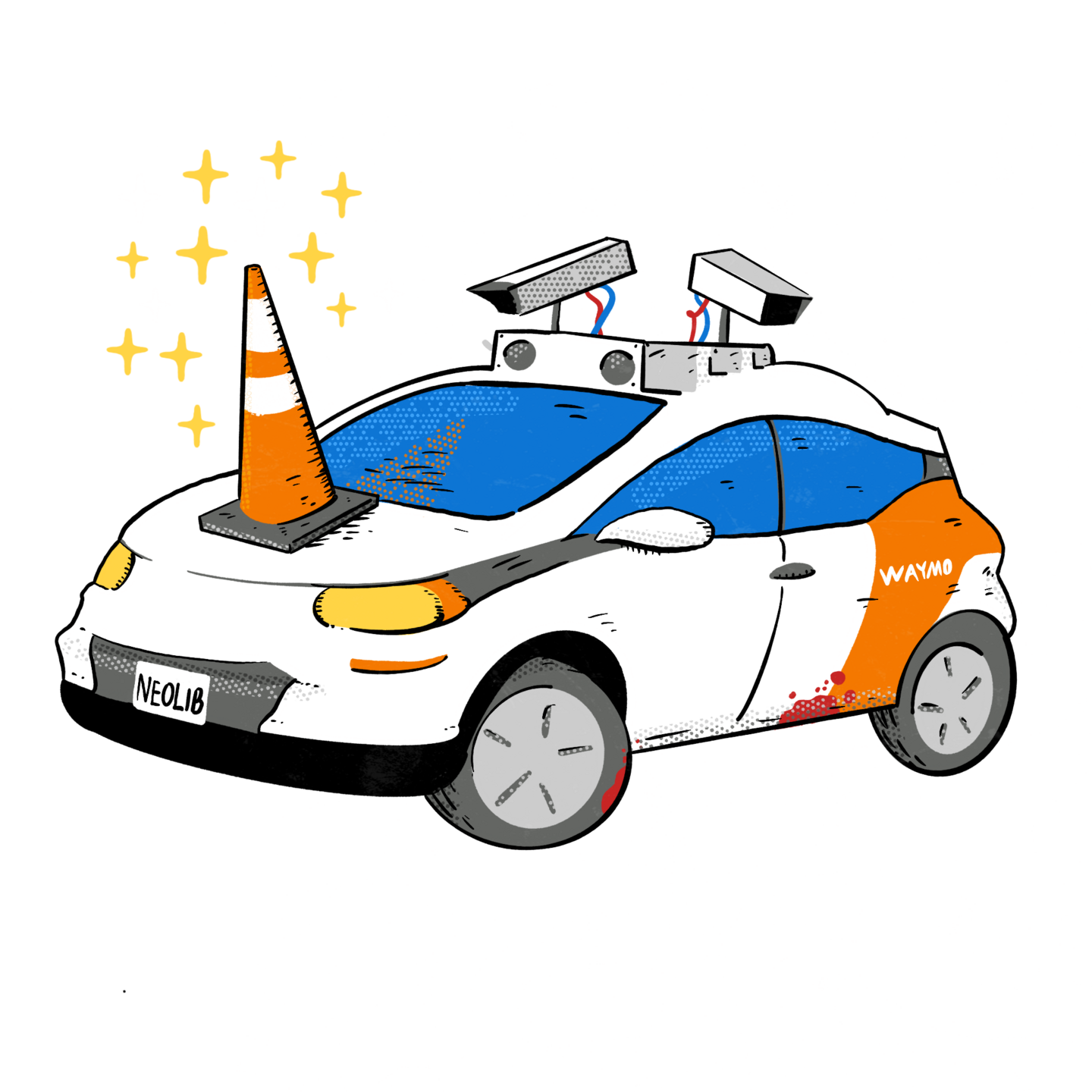
Lam’s comments point not to a failure of city planners but to a handful of breakdowns that had disastrous cascading effects. Videos posted on social media after the fireworks cite one possible culprit: the long queue of Waymo robotaxis clogging Edie Road, a connection point to the roundabout on Girard Road that feeds into Marina Boulevard. Waymo acknowledged to the Chronicle that some vehicles in its fleet lost their battery power while idling and had to be towed. The autonomous vehicle company did not specify how many cars it had to remove, and city tow records are inconclusive, as Waymo has its own roadside assistance operations.
“Our priority is keeping San Francisco moving safely, especially during major city celebrations,” a spokesperson for Waymo said in a statement. “We continue to review the events of July 4 and are in contact with city officials and local authorities. We’ll apply any learnings to our operations to strengthen Waymo’s resilience during major traffic disruptions in the future.”
Left unmentioned was San Francisco’s previous major traffic disruption last December, when power outages caused Waymo robotaxis to stall nearly 1,600 times because they became confused at intersections where stoplights went dark. The blackouts put Waymo under a microscope; the company’s July 4 performance seemed to reinforce impressions that its fleet can’t handle throngs of people or unpredictable environments.
“It behooves the (state) regulators to take a long, hard look at whether Waymo should be taken off the road in anticipation of major events,” Mandelman said in an interview. While the supervisor characterized himself as generally accepting of autonomous vehicles, he’s aware that they get confused and cause problems when confronted with “unexpected traffic snarls,” and sometimes wind up blocking emergency vehicles. Immobilized Waymos were among the “stew of bad things that led to a bad night” on July 4, he said.
Mahmood’s preliminary conversations with city departments suggest that Waymo is “partly responsible” for the July 4 traffic nightmare. He wants to assess all the facts before making a determination.
See original article by Rachel Swan at SF Chronicle