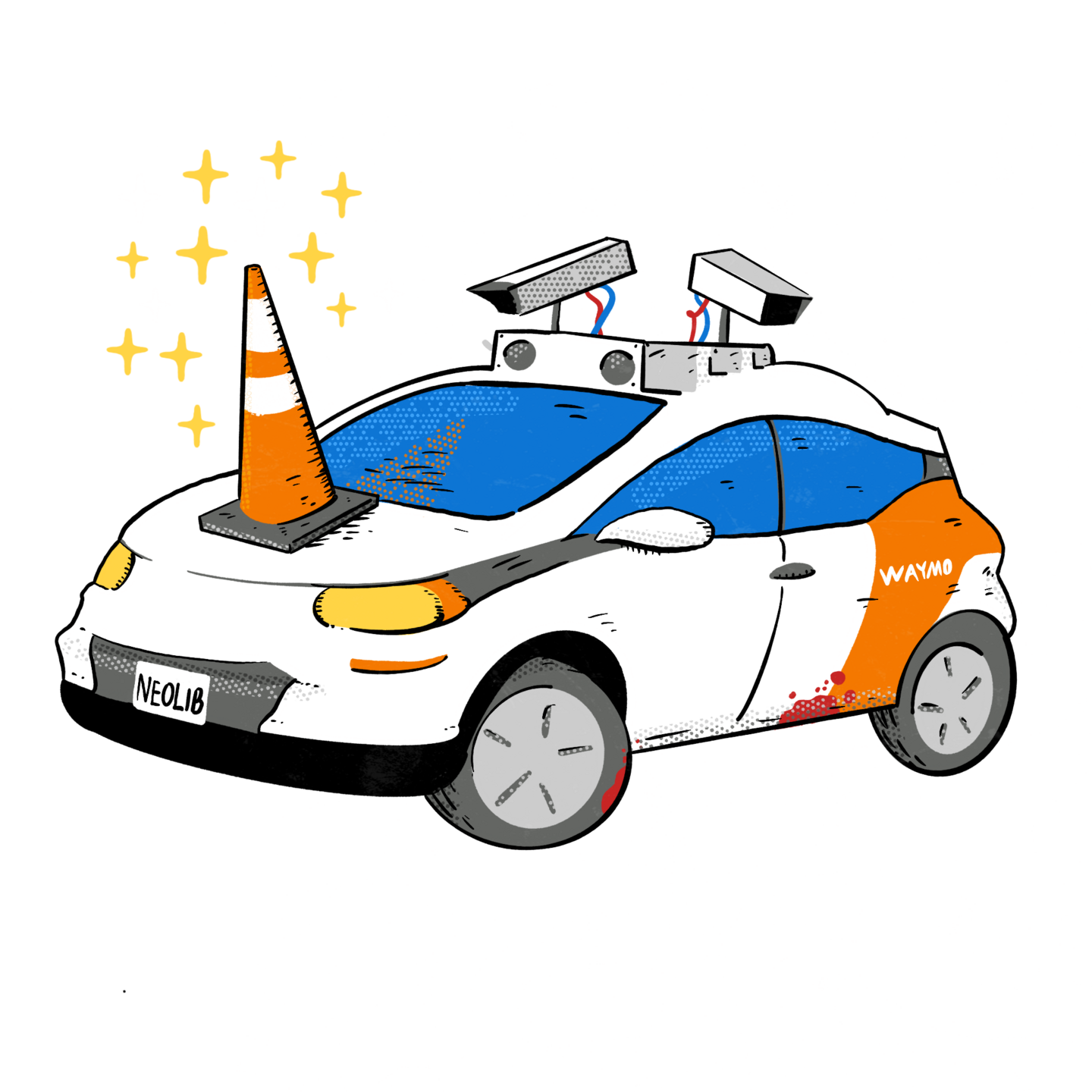
SF Standard – Cops can ticket driverless cars now
The new policy comes amid sweeping new regulations adopted by the DMV, which will also now allow driverless trucks on California roadways.
New DMV regulations are described at https://www.dmv.ca.gov/portal/news-and-media/new-autonomous-vehicle-regulations-strengthen-oversight-and-enforcement-authorize-trucks-and-transit/
See original article by Jennifer Wadsworth at SF Standard
Driverless cars in California are no longer exempt from traffic citations, and the companies that own them now face serious consequences for letting them drive into the scene of an active emergency.
The DMV announced the rules on Tuesday as part of a litany of new autonomous vehicle regulations — some inspired by cases where robotaxis obstructed police and firefighters in San Francisco, and at least one local incident in which a San Bruno cop couldn’t ticket a Waymo for an illegal U-turn.
Under the updated policies, which the DMV called the most comprehensive to date in the U.S., manufacturers can also get permits to deploy heavy-duty driverless vehicles on California roadways.
“California continues to lead the nation in the development and adoption of AV technology, and these updated regulations further demonstrate the state’s commitment to public safety,” DMV Director Steve Gordon said in a news release Tuesday evening. “These updates support the growth of the AV industry by enhancing public safety and transparency while adding additional accountability for AV manufacturers.”
The provisions for how authorities can respond in emergency situations aim to prevent the kind of obstruction SF saw just before Christmas when Waymos stalled in city streets during a PG&E blackout.
DMV’s new regulations require driverless car companies to respond to first-responder calls within 30 seconds. They also authorize local officials to geofence the cars from active emergency zones, and to order vehicles already in a restricted area to leave.
If a company violates those directives, they risk getting their permits suspended or revoked.
Remote operators are held to a higher standard under the new rules as well, having to undergo licensing and permitting before they can control a driverless vehicle.
Meanwhile, the DMV expects companies to report more data about safety metrics and system failures, including vehicle immobilizations, hard-braking incidents, and collisions.
Failure to comply with the regulations could lead to the DMV restricting fleet size, speed, and geography, while also limiting operations during certain weather conditions, if deemed necessary for public safety.
See original article by Jennifer Wadsworth at SF Standard