The Frisc – Waymo Behavior Now Harder to Decipher, Even After July 4th Fiasco
Mayor Lurie wants more scrutiny. Despite new California DMV rules, there’s less information publicly available, not more.
See original article by Kristi Coale at The Frisc
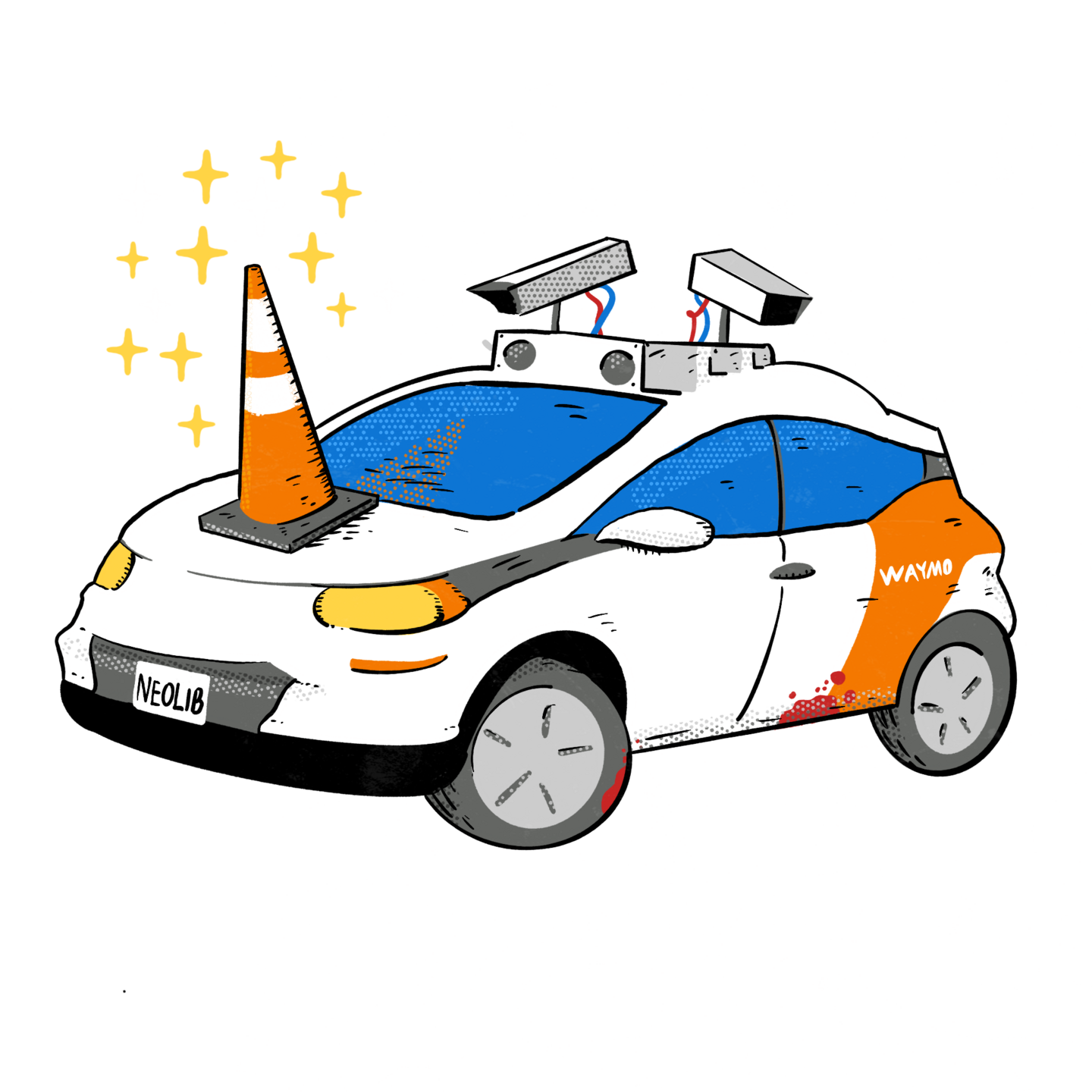
On the 4th of July, San Francisco’s fog put a damper on an historic fireworks show. Adding to the summer bummer was a traffic meltdown, with stalled Waymo robotaxis in the middle of it all.
The fiasco included long lines of Waymos blocking cars, shuttles, and Muni buses on one of the busiest days on SF streets. Transit officials said this week that they’re still sorting out the data to understand what happened.
Two weeks ago, Mayor Daniel Lurie called on state regulators to hold Waymo accountable — something he didn’t do in December when a citywide blackout also led to big Waymo problems. The mayor doubled down this week, backing legislation that calls on the National Highway Traffic Safety Administration (NHTSA) to set better standards for how robotaxi companies work with first responders.
Lurie joins a chorus of voices calling for more accountability from Waymo. But previous attempts to shed more public light on autonomous vehicle behavior has resulted in less transparency, not more.
In 2024, California lawmakers tried to strengthen laws and clean up the patchwork of information AV companies had to report about crashes and other incidents. But as The Frisc reported in February, the bills were shelved after Gov. Gavin Newsom promised that the Department of Motor Vehicles (DMV), which oversees road safety, would write new regulations.
Those regulations took effect in April. They gave first responders more power to cite and restrict AVs that misbehave, and demanded that companies open lines of communication faster in emergency situations. The rules also required them to divulge more information about their cars’ behavior.
But since then, the quality of information available at the state level has eroded. Meanwhile, NHTSA has become the main source of detailed information about robotaxi collisions — a scenario state lawmakers have wanted to avoid, given that the Trump administration has removed public data in other areas it finds objectionable.
To be clear, there’s been no indication NHTSA would do the same with AV safety data. In fact, this month NHTSA administrator Jonathan Morrison threatened action against AV companies for their interference with first responders.
But California, ground zero for AV technology, doesn’t have enough insight into the cars’ behavior, says one state lawmaker who has tried more than once to craft regulations. More public information would increase “pressure for the DMV to use its enforcement authority and establish clear benchmarks,” says state Sen. Dave Cortese, a Democrat who represents the South Bay.
Without the state forcing the issue, local agencies that bear the brunt of AV activity can’t assess how the companies are actually performing, Cortese says. But he also acknowledges that more transparency is easier said than done.
Crashes and collisions, before and after
Earlier this year, Cortese introduced a bill to require companies to deal with stalled vehicles faster by telling local officials where cars are, giving first responders easier access, and more. Delays could result in fines.
But Cortese’s bill says nothing about data collection or transparency. That’s for a few reasons, he says.
First, local governments can’t require data reporting because they don’t have regulatory power over AV companies. (Cortese already tried this in 2024, and his bill was shot down in committee.) Second, more reporting requires more funding, and he doesn’t want to risk asking for it as he moves his current bill forward.
“It needs to be a standalone bill,” Cortese says.

The DMV, which issues permits for AVs in California, expanded AV reporting requirements in April to align more closely with stricter NHTSA requirements. One big change: companies must now report a wider range of safety issues such as stalls and sudden braking, not just collisions.
Before the new rules took effect, collision reports were easily downloadable from the DMV site. They included basic information such as the date, time, and location, as well as a detailed narrative of each incident.
The companies’ descriptions could be vague or neutral, sometimes comically so. (“The Waymo made contact with the vacuum cleaner.”) They were also, of course, self-reported.
That hasn’t changed. But these PDFs are no longer available. Instead, the DMV points visitors to a UC Berkeley-run dashboard. Each incident now includes just a thumbnail of information. And, despite the new rules requiring a wider range of incidents like the stalls that plagued SF on July 4th, the dashboard still only tracks collisions.

More troubling is that not every incident that was in the PDF collection now shows up on the dashboard. One notable incident — a July 2024 encounter that ended with a bicyclist making contact with a Waymo and falling over — is absent. So is the time when a Waymo hit a raccoon on Highway 280.

The Berkeley dashboard does have the advantage of aggregate data: types of crashes, crashes per hour, and mapped locations. But for deeper dives into each incident, the public must go to the NHTSA website, where you can only get more details by downloading and analyzing raw data files in a spreadsheet app.

This disconnect is a problem, says Carnegie Mellon University professor emeritus Phil Koopman, author of the Autonomous System Safety Substack. “There have been past incidents in which a California (DMV) report contained information critical to understanding what happened that was missing from NHTSA reports,” says Koopman.
Koopman notes that NHTSA allows redactions of crash descriptions, leaving a partial picture. “Previously California did not permit leaving out part of the crash description in their reports,” he explains.
Despite the DMV’s new rules, it’s also unclear when either agency will post reports of non-collision incidents. DMV spokesperson Katarina Snow did not say when or where the reports would be available. She referred The Frisc only to the Berkeley dashboard and NHTSA site for reports.
Waymo declined to comment to The Frisc about its data policies or answer questions for this story.
In a jam
In San Francisco’s December power outages, blacked-out traffic lights flummoxed the Waymo fleet. News reports and social media feeds showed stalled Waymos blocking cars and buses. The company soon published a blog post about it.
Two months later, two Waymo representatives spoke at a City Hall hearing, expressing general contrition — “[we] did not meet our standards during the outage” — but more details about the blackout came from SF’s Department of Emergency Management (DEM). The DEM said its dispatchers called Waymo 31 times to try to clear city streets. One dispatcher was kept on hold for nearly an hour. DEM said Waymos caused a 40-minute ambulance delay and blocked fire trucks from getting to two fires, including one at the PG&E substation that triggered the blackout.

In the same hearing, supervisors cited a report from the California Public Utilities Commission (which governs passenger service) that 1,593 Waymo vehicles had “stoppage events” for two minutes or longer in areas affected by the blackout. The Frisc was not able to independently confirm this number by press time.
The 4th of July was supposed to be different. Anticipating huge crowds, Waymo voluntarily embedded a representative in the city’s emergency response center.
It didn’t help. As more than 100,000 people made their way to the fireworks show, traffic backed up for hours. An unknown number of Waymos stuck in traffic lost battery power and had to be towed, adding to the chaos.
The San Francisco Municipal Transportation Agency says it will issue a report on the gridlock in coming weeks. In emails obtained by The Chronicle, rideshare company Uber (an erstwhile rival to Waymo) put at least some blame on stalled Waymos. Waymo has yet to divulge how many vehicles were on SF streets that night, how many broke down, or other pertinent data.
When asked to comment about July 4th, a Waymo spokesperson referenced a news report about the company’s performance during a power outage in western SF two weeks later.
With so many parties demanding more AV data, other agencies have tried to fill in the gaps.
Back in 2023, SFMTA cobbled together reports from various sources to make a public dashboard of local incidents. But it has ended that effort. The San Francisco Fire Department continues to log internal reports, but it doesn’t readily make them public. The Standard recently reported that since April 2025 the department has filed at least 31 internal reports of robocar interference with emergency operations.
The patchwork of reporting has made it difficult to get a full picture of Waymo’s safety record. For now, the entity with the most comprehensive data is the federal government.
Federal credit
Long before its July reprimand of AV companies, NHTSA was looking into Waymo’s errant behavior across several states.
In May 2024, the agency opened an investigation into Waymo’s potential violation of traffic safety laws and “unexpected behavior,” including 17 collisions and instances of cars entering construction zones. After the investigation closed in July 2025, Waymo issued two recalls to update software and better detect roadway barriers.

Last December, NHTSA began looking into reports of Waymos in Atlanta and Austin illegally driving around school buses that had flashing lights and stop arms extended. In Austin, the cars continued to pass buses despite a software update, assistant police chief Travis Pickford told The Frisc in January. NHTSA also announced an investigation of a Waymo hitting a child near a school in Santa Monica, CA, in January.
NHTSA seems willing to keep its foot on the pedal of AV oversight, but California remains wary of the Trump track record on funding, data, and regulation. The DMV says its own rules will remain in place should NHTSA rescind its own AV reporting requirements. The DMV didn’t respond when asked specifically what it would do if data were to disappear from the NHTSA website.
The 4th of July gridlock also caught the eye of U.S. Congressman Kevin Mullin (D-California), who is proposing legislation in the spirit of state Sen. Cortese on moving stalled cars, better communication in emergencies, and more.
Like Cortese’s bill, Mullin’s bill also doesn’t address the data gap. Waymo will have to provide some level of reporting about July 4, but it has offered no signals that tracking down the data will be easy. For now, the company gets to keep driving the narrative about its own safety record.
Correction (8/3/26): We corrected Phil Koopman’s title. He is a professor emeritus at Carnegie Mellon University.
See original article by Kristi Coale at The Frisc