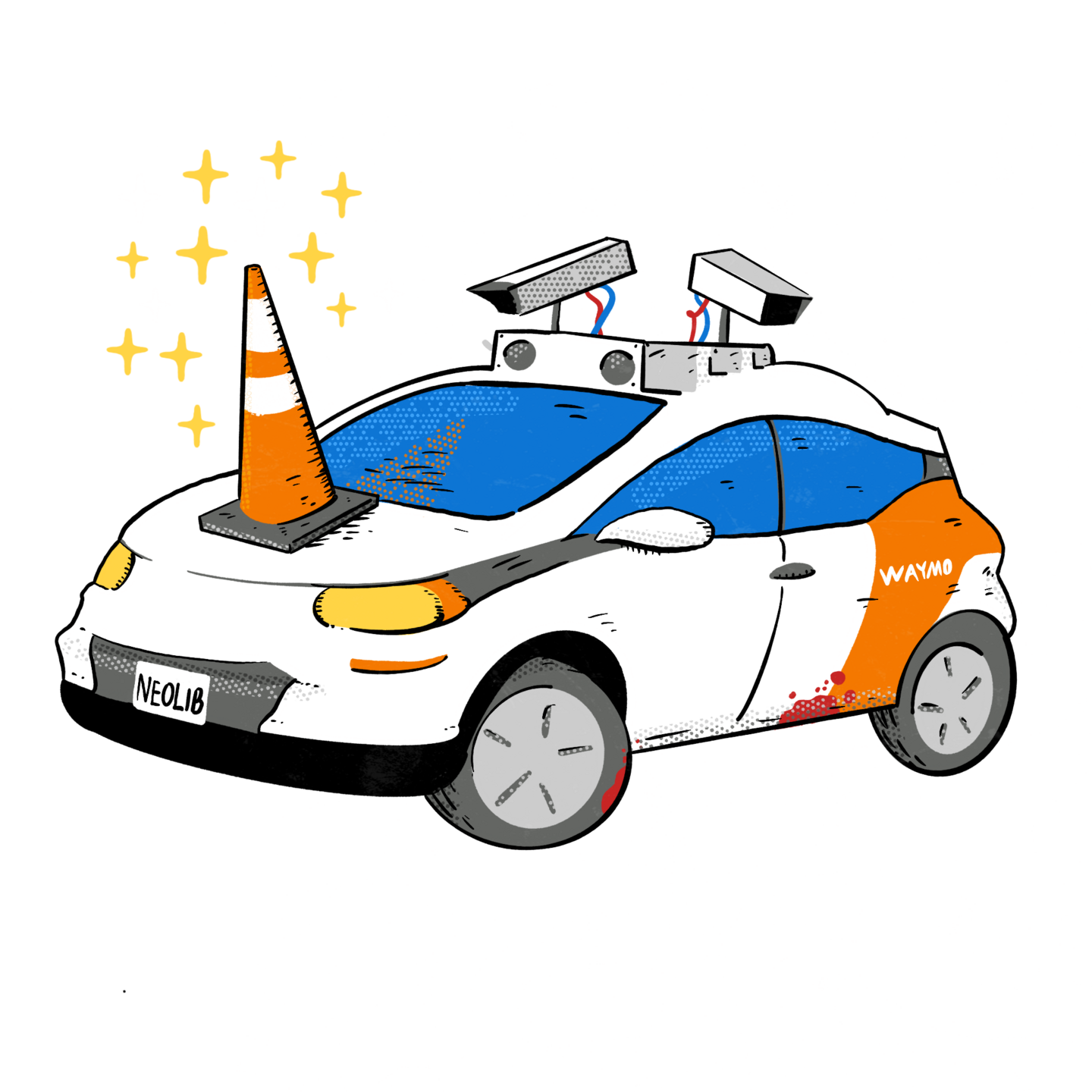
Waymo continues to mislead public on what happened during the San Francisco blackout
First, the good news. Waymo finally acknowledges that their vehicles are not truly autonomous and require human intervention for complicated situations. Their most recent blog post, repeated below, explains that for complicated situations the vehicles require a “confirmation” from a human on what to do. Until they receive a human confirmation the vehicles simply remain in place, even if they end up blocking traffic.
Such a confirmation by a human cannot be replaced by a software update. Therefore there will always be situations that are beyond the capability of an autonomous driving system, meaning that true autonomy cannot currently be accomplished.
To avoid problems Waymo has done a great deal of engineering. Their vehicles have multiple redundant cellular modems for communication. And they use multiple cellular carriers, likely AT&T and Verizon. That way when there is a problem with a component their system is designed to continue to operate, and human input can be provided for any unusual or complicated situations encountered.
But the San Francisco power outage was both widespread and long lasting. The problem wasn’t that a single component of the communication system failed. Instead, the problem was that the batteries of the cell towers eventually ran out of power, bringing down the ENTIRE communication system for large swaths of San Francisco. Once communication was not available the Waymo vehicles could not deal with the many complicated situations of traffic signals not functioning, and the Waymo vehicles ground to a halt. And given the complicated situations, the vehicles often stopped in the middle of intersections or otherwise blocking traffic, including emergency and transit vehicles.
The Next Earthquake
Everyone expects that another large earthquake will hit San Francisco in the foreseeable future. As experienced in the ’89 earthquake, power will go down for a long period of time. This means that San Francisco will encounter the same Waymo gridlock problem, but when there are many serious emergencies that need to be responded to quickly. Having Waymo vehicles blocking traffic during emergencies is simply not acceptable.
Market Street
Market Street is a key transit corridor. If Waymo vehicles were using Market Street they would have blocked critical transit lines. This year the Mayor made the mistake of allowing any and all commercial vehicles, including Waymos, on Market Street. Fortunately, Waymos still aren’t using Market Street because they cannot handle pickups and dropoffs there legally. They are restricted to using just specific pickup/dropoff zones, but those zones are now unusable because other vehicles use them for parking. Therefore during the power outage Market Street was not blocked by Waymos.
But the power outage shows that Waymo vehicles, as well as other private vehicles not delivering goods, should not be allowed on Market Street at all. If Waymo actually starts using Market Street significantly then they will completely block the important transit corridor if there is another power outage. And that is only a question of when, not if.
The original Waymo post:
Autonomously navigating the real world: lessons from the PG&E outage
December 23, 2025
At Waymo, our mission is to be the world’s most trusted driver. We know trust is built through consistent behavior over time—earned through every mile we drive and every interaction we have with the community. This past Saturday, as a widespread PG&E outage cut power to nearly one-third of San Francisco, our service was put to the test. With power now restored, we want to share an account of our operations during the outage and how we are evolving to better serve the city.
The scale of the outage and the sheer number of disabled traffic lights were the primary contributors to city-wide gridlock. As signals went dark across major corridors, the resulting congestion required law enforcement to manually manage intersections. The situation was severe enough that the San Francisco Department of Emergency Management advised residents to stay home, underscoring the extraordinary nature of the weekend’s disruptions.
Navigating an event of this magnitude presented a unique challenge for autonomous technology. While the Waymo Driver is designed to handle dark traffic signals as four-way stops, it may occasionally request a confirmation check to ensure it makes the safest choice [Editors note: finally Waymo admits to the vehicles not being autonomous. But they are misrepresenting the situation by using the word “occasionally”]. While we successfully traversed more than 7,000 dark signals on Saturday, the outage created a concentrated spike in these requests. This created a backlog that, in some cases, led to response delays contributing to congestion on already-overwhelmed streets [Editors note: this is a lie. The 5G communication system went down when cell tower batteries were depleted, which caused not just response delays but a complete lack of ability to operate].
We established these confirmation protocols out of an abundance of caution during our early deployment, and we are now refining them to match our current scale. While this strategy was effective during smaller outages, we are now implementing fleet-wide updates that provide the Driver with specific power outage context, allowing it to navigate more decisively.
As the outage persisted and City officials urged residents to stay off the streets to prioritize first responders, we temporarily paused our service in the area. We directed our fleet to pull over and park appropriately so we could return vehicles to our depots in waves. This ensured we did not further add to the congestion or obstruct emergency vehicles during the peak of the recovery effort.
The path forward
We’ve always focused on developing the Waymo Driver for the world as it is, including when infrastructure fails. We are analyzing the event, and are already integrating the lessons from this weekend’s PG&E outage. Here are some of the immediate steps we’re taking:
- Integrating more information about outages: While our Driver already handles dark traffic signals as four-way stops, we are now rolling out fleet-wide updates that give our vehicles even more context about regional outages, allowing them to navigate these intersections more decisively.
- Updating our emergency preparedness and response: We will improve our emergency response protocols, incorporating lessons from this event. In San Francisco, we’ll continue to coordinate with Mayor Lurie’s team to identify areas of greater collaboration in our existing emergency preparedness plans.
- Expanding our first responder engagement: To date, we’ve trained more than 25,000 first responders in the U.S. and around the world on how to interact with Waymo. As we discover learnings from this and other widespread events, we’ll continue updating our first responder training.
Undaunted in our mission to make our streets safer
We live and work in San Francisco, and we are grateful to the city’s first responders for their tireless work, and to Mayor Lurie for his leadership.
Backed by 100M+ miles of fully autonomous driving experience and a record of improving road safety, we are undaunted by the opportunity to challenge the status quo of our roads, and we’re proud to continue serving San Franciscan residents and visitors.